
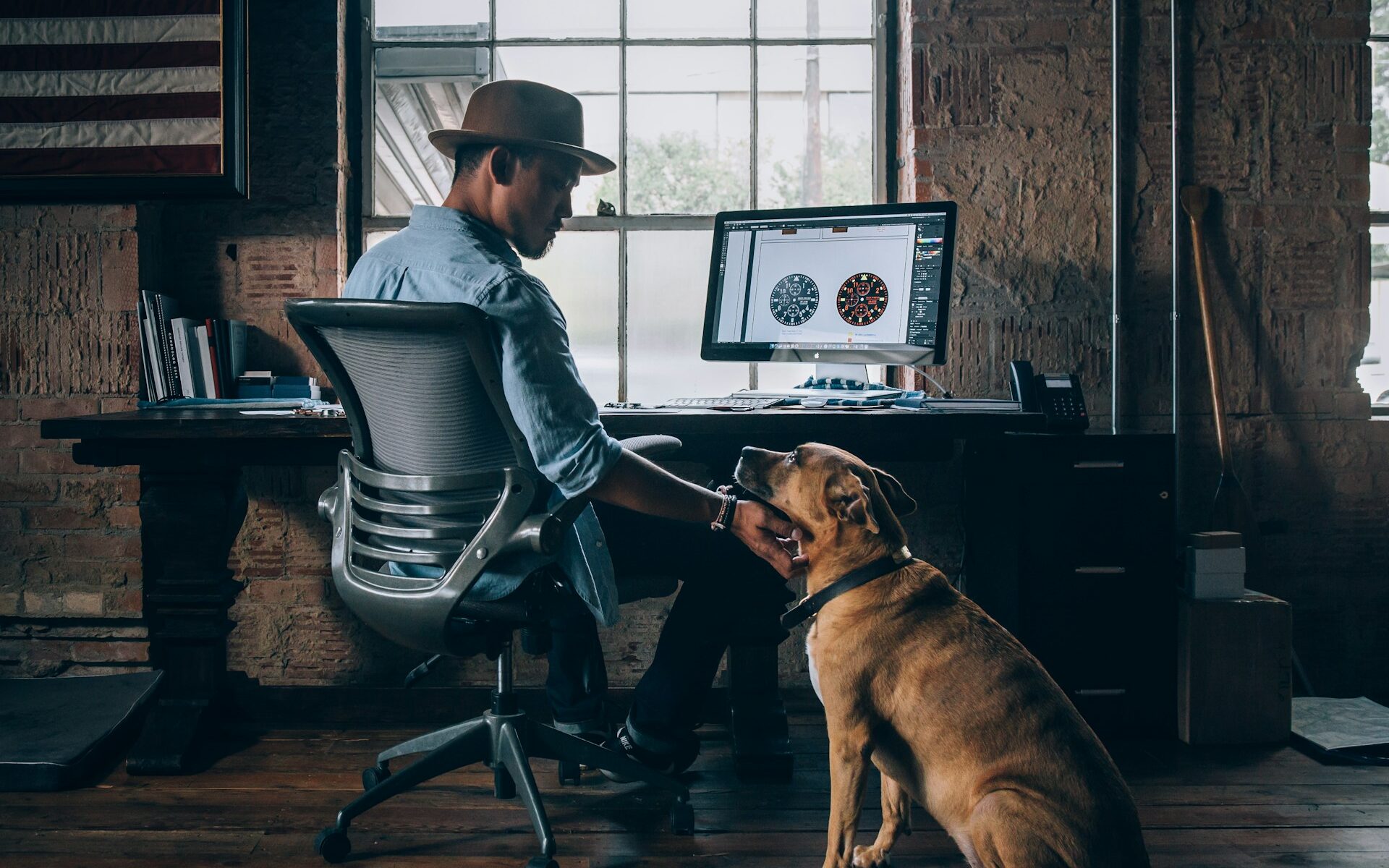
Creating a home office isn’t just about setting up a desk and chair – it’s about creating an environment that influences how you think, feel and work. Productivity isn’t determined by tasks and deadlines but by the space in which those tasks are done. A workspace can either fuel motivation or drain energy so it’s essential to design a home office that matches your workflow and mental clarity.
The psychology of workspace design
Traditional offices are designed with structure in mind – separate spaces for meetings, deep work and collaboration. A home office is often just one room (or even just a corner of a room) that must accommodate multiple uses. How that space is laid out affects productivity.
For example a workspace that’s too visually stimulating can create mental clutter and distractions. A lifeless environment can stifle creativity. Finding a balance between organisation and inspiration is key.
- A designated work zone tells the brain it’s time to focus. Even in a small space defining a specific work area – even just a rug or shelving – helps create that separation.
- Work related items within reach keep everything streamlined. If tools and essentials are scattered throughout the house the brain has to constantly switch between “work mode” and “search mode” and that’s wasting energy.
- A view that encourages focus is more powerful than most realise. Facing a window may bring natural light but if the outside world is too distracting positioning the desk against an internal wall with minimal decor may be more effective.
A home office that feels intentional and structured helps you stay focused and on purpose all day.
Home office – creating a space that adapts to energy levels
Not every task requires the same level of concentration yet most home offices are designed for one way of working. A well thought out setup considers energy levels throughout the day and accommodates different types of work.
- Primary desk setup for deep work where concentration is key. This is the space for analytical thinking, problem solving and important projects.
- Secondary space for lighter tasks like responding to emails, reading or brainstorming. A comfortable chair, a standing desk section or even a separate area with a different posture can break up the monotony.* Movement friendly setup helps combat fatigue. If space allows, switching between sitting and standing desk or even having an area to stretch can help sustain energy throughout the day.
By allowing for these changes in workspace dynamics a home office becomes a more functional and personal space that adapts rather than restricts.
Home office – using sensory design to focus
A workspace isn’t just about what you see – it’s about what you feel. Sensory design plays an underrated role in concentration and overall wellbeing in a home office.
- Sound: Some people love silence, others work better with background noise. Adjust the acoustic environment – whether through noise cancelling headphones, ambient sounds or a curated playlist – and create your ideal mental space.
- Smell: Certain scents like peppermint, citrus or rosemary are known to enhance focus and clarity. A diffuser, candle or fresh air circulation can subtly influence mood and energy levels.
- Touch: The textures in a workspace – from the softness of a chair to the smoothness of a wooden desk – contribute to long hours of work. An inviting workspace isn’t just about looks – it’s about making long periods of work physically enjoyable.
Adjust a home office to engage the senses in a way that supports focus and it becomes a more enjoyable and effective space.

Creating rituals to separate work from home
One of the biggest challenges of remote work is the blurring of personal and professional life. Without the physical commute it’s harder to mentally switch between work and play. A well designed home office should have rituals that define the start and end of the workday.
- Start up routine signals the start of work. This could be as simple as making a coffee, reviewing the day’s tasks or adjusting the lighting to “work mode”.
- Shutdown sequence helps the mind disengage from work. This might be physically shutting down devices, moving work items out of sight or taking a short walk to separate work hours from home life.
- Workspace that disappears at the end of the day is essential for those working in shared or multi-functional areas. If a full home office isn’t possible use a desk with storage to tuck away work materials and maintain a clear distinction between work and personal time.
Without these rituals a home office can start to feel like a space where work never stops and that leads to burnout.
Home office – a space that adapts
A good home office isn’t designed and left static – it’s a space that evolves as needs change. Whether it’s for new projects, seasonal light changes or simply realising your setup no longer feels right, refining your workspace over time is key to making it functional and beautiful.
By thinking about design, sensory elements and daily rituals a home office becomes a space that works for you, not just a place to work.