Slow tech workspace – a softer rhythm for modern desks

desk

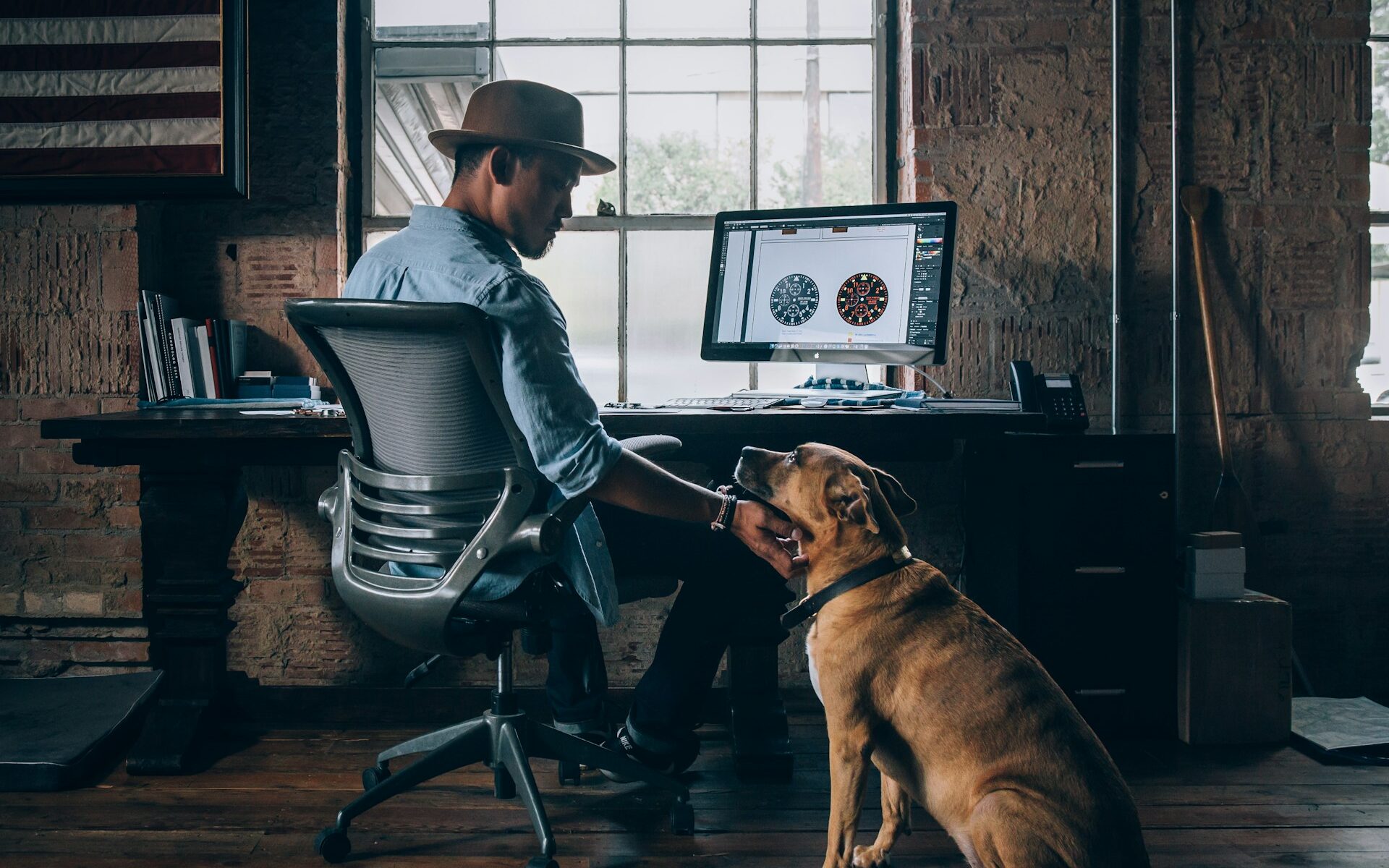
The idea of a slow tech workspace has grown quietly out of the feeling that too much speed leaves us unfocused. Many desks today are built around efficiency, shortcuts and constant switching, yet the mind rarely thrives under that pressure. A slower approach doesn’t mean abandoning technology; it means creating an environment in which devices blend into the rhythm of the room instead of pushing it forward at full force.
Natural materials, clear surfaces and stable structures all contribute to that shift. They help move the focus from what demands attention to what supports it. A workspace shaped this way feels less like a place where tasks are rushed and more like a setting that gives them space to unfold.

When the pace around you softens, you notice different things. The sound of a pen on wood, the warmth of a raised platform under a monitor, the calmness of a surface that doesn’t wobble when touched. These details don’t slow work; they steady it. And when the environment steadies, thinking becomes more fluid.

Slow tech workspace – a desk shaped by presence, not pressure

A slow tech workspace begins with presence. It encourages you to choose tools deliberately, to place them where the hand expects them to be, and to notice how the desk responds when objects stay in a stable rhythm.
There is no rush to clear everything away, nor any pressure to fill empty areas. The surface breathes. Items rest in places that feel natural. Your gaze moves more easily across the desk because nothing demands to be processed immediately.

Even the act of lifting a device changes when the environment is calmer. A phone picked up from a quiet charging stand, a laptop resting on a wooden platform, a notebook sliding across a smooth surface — the gestures feel grounded. And grounded gestures affect the whole working pace.

A desk that listens rather than competes

The space around you stops pushing forward and begins to support steadier movement.

Designing a slower rhythm through material and height

A slower workspace often emerges from the materials that shape it. Wood introduces warmth and a sense of weight, encouraging slower gestures. Felt softens sound. Steel creates stability without shouting for attention.
These textures never overwhelm; they steady. When combined with layers of height — a raised shelf for screens, a clear surface for writing, a lower zone for accessories — the desk gains a gentle structure. Tasks fall into place more naturally, and switching between them feels less abrupt.

This is the quiet advantage of a slow-paced workspace. It doesn’t limit productivity. It guides it. The desk becomes a landscape instead of a flat surface loaded with tools, and landscapes always provide direction.

Materials become part of the tempo

Textures influence how quickly or slowly your hands move, reshaping daily flow without you noticing.

desk

Slow tech workspace – easing the mind through calmer interaction

One of the reasons digital fatigue builds so quickly is constant switching. Notifications, tabs, cables, screens, accessories all invite micro-attention. A slow tech workspace reduces the invitations.
Devices have designated places to rest. The layout uses clear lines, soft boundaries and stable forms to create gentle zones of attention. When the phone is not needed, it rests further away. When a tool is meant to be used often, it sits within a natural hand’s reach.

As the workspace becomes more intuitive, interaction with technology becomes less reactive. You avoid the quick, jittery movements that often accompany busy desks. Instead, you approach each object with clearer intention, and that intention creates calm.

Fewer jolts, more coherence

The desk stops interrupting your thought process and begins to guide it.

Letting analogue and digital coexist without tension

A slow approach makes room for both digital tools and analogue ones. A notebook doesn’t feel old-fashioned on a modern desk; it becomes a different pace within the same rhythm.
The key is separation without distance. Digital tools live in one gentle zone, analogue in another. Neither overlaps unless you choose it. The result is not division but ease — a way of working that allows both to exist side by side without competing for dominance.

This coexistence encourages the mind to shift modes more smoothly. You move from typing to sketching, from reading on a screen to noting thoughts on paper, without feeling torn between worlds. The desk becomes a bridge rather than a battlefield.

Each tool contributes to the tempo

When no item demands urgency, the whole environment becomes calmer.

Slow tech workspace – a way of working that grows with you

The most compelling aspect of a slow tech workspace is how naturally it evolves. It doesn’t lock you into a rigid system. As your work changes, the desk adapts.
Some weeks you need more space for screens; others call for more paper. Sometimes the desk supports long, focused hours; sometimes it becomes a softer base for planning and thinking. The slow approach makes room for all of it.

Over time, the workspace begins to mirror your habits. Not the rushed ones, but the steady ones — the gestures you repeat without noticing, the natural flow your hand prefers, the comfort your eye finds in lines that don’t feel forced.

A desk that settles into your rhythm

You shape the space, and the space quietly shapes your pace.

Slow tech workspace – a calm foundation for complex work

Slowing the pace of the workspace doesn’t mean reducing ambition. It means refining the environment so that ambition does not burn through your energy too quickly.
A desk that welcomes slower gestures allows for deeper thinking. A surface that stays still encourages concentration. Tools that rest in predictable places free the mind from constant orientation. The result isn’t slower work — it’s steadier work.

By the end of the day, you feel the difference not in how much you accomplished but in how you arrived there. With more clarity, less agitation, and a workspace that didn’t drain you while you moved through it.

A slow tech workspace becomes less of a trend and more of a personal rhythm — one that continues long after the laptop closes.
Magsafe collection – a magnetic approach to everyday charging

magsafe

The magsafe collection from Oakywood builds around one simple idea: charging should feel natural, not like a chore. Instead of searching for cables, adjusting connectors or checking angles, the phone settles into place through a clear magnetic pull. You feel it align, click gently, and remain secure. After a few days you stop thinking about the process at all — it becomes part of the desk, the bedside table, the routine.

What makes this collection stand out is not only the use of MagSafe technology but the way each piece blends that function with carefully chosen materials. Wood brings warmth, metal adds precision, and the internal magnetic structure holds everything steady. The combination feels crafted rather than engineered, giving the workspace a calmer presence while still offering the efficiency of modern charging.

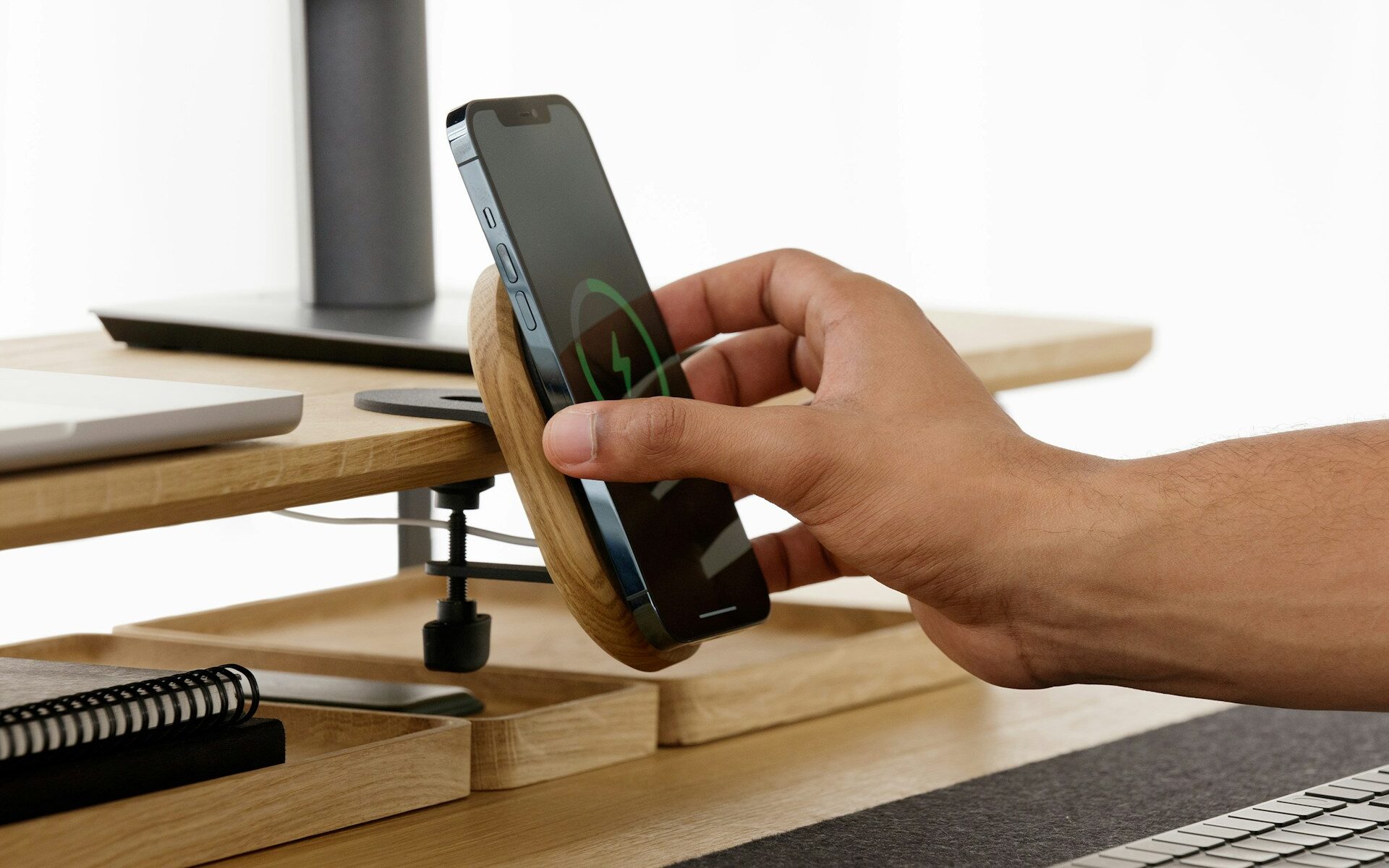
The range focuses on upright magnetic placement, letting the phone attach securely at a comfortable viewing angle while charging. The magnetic pull positions the device automatically, keeping it stable and easy to glance at during work without introducing clutter or unnecessary movement. Each piece feels grounded and intentional, designed to sit on the desk with a quiet, unobtrusive presence.

Magsafe collection – a tidier rhythm for daily use

The magsafe collection reduces the small interruptions caused by cables that tangle, slide or fall behind the desk. With magnetic alignment, the phone returns to the same position each time, allowing the surface around it to stay more organised.
A dedicated charging spot introduces a gentle rhythm: place the phone down, let it connect, continue working. The gesture feels effortless because it avoids the tiny adjustments normally required with wired chargers.

This consistency also helps keep the workspace visually calmer. A single surface, free from trailing cables, gives the impression of a desk that is ready for the next task rather than one holding leftover clutter. Over time, the effect grows. You begin to trust the area where the charger sits as a dependable anchor point.

A surface that welcomes the phone, not commands it

The magnetic pull guides the placement without forcing alignment. Ease replaces precision.

A design shaped by natural materials

Every piece in the collection blends technology with tactile surfaces. The wooden elements introduce a quiet warmth, softening the look of modern devices. Metal components serve as a structural counterpart, stabilising the form and supporting the magnetic system inside.
The result is a set of chargers that feel balanced: not overly technical, not overly decorative. They settle into a workspace naturally, becoming part of the environment rather than a gadget that competes for attention.

Because the materials are finished with care, the surfaces age gracefully. The wood gains subtle character over time, and the metal keeps its clean, steady presence. Even as the phone changes from one generation to another, the charger retains its place on the desk with quiet confidence.

Texture that shapes atmosphere

The physical feel of the materials influences the rhythm of picking up and setting down the phone.

magsafe

Magsafe collection – charging that adapts to different routines

Some workdays rely on speed. Others call for long stretches of quiet focus. The magsafe collection adapts easily to either pattern. When the phone needs to stay visible, an upright magnetic surface keeps it at a comfortable viewing angle.

The magnetic alignment means that the phone can be lifted quickly and returned without searching for the charging point. This fluid movement makes short breaks — grabbing the phone for a call, checking a message, returning it to charge — feel smoother.

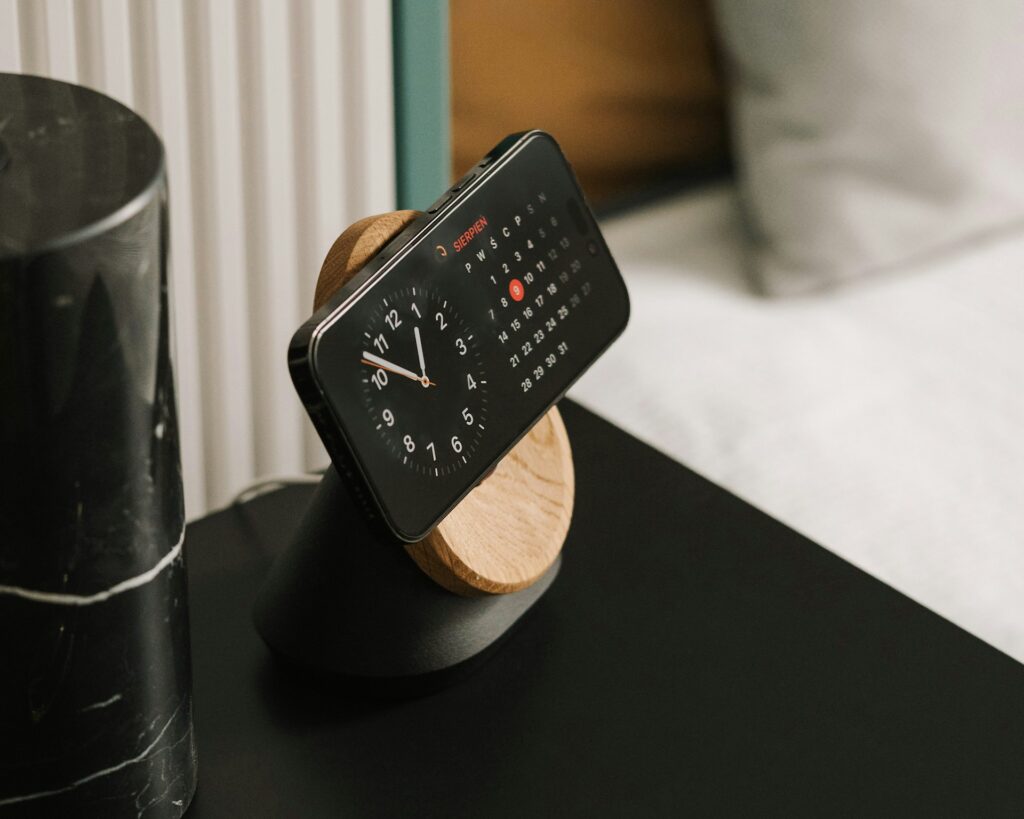
For evening use, the stable magnetic connection works just as well at the bedside. The phone stays anchored even when reaching for it in low light, and it returns to its position without fumbling.

A system that reshapes habits

Consistency becomes routine, and routine becomes effortlessness.

Magsafe collection – stability that supports everyday use

A key part of the collection’s design is stability. The weight distribution, the steel components and the internal magnetic construction create a charging platform that does not shift when the phone is lifted or placed down.
That steadiness builds trust — you know the charger won’t tip, and the phone won’t slide. Because of this, the charging action feels smoother, and the workspace remains undisturbed by sudden movements.

This reliability also supports long-term use. The chargers are built with materials strong enough to remain in place throughout daily cycles of picking up, checking and replacing the phone.

Stability becomes part of the experience

When nothing moves unexpectedly, your attention stays where it needs to be.

A workspace that feels clearer through quiet structure

Once the magnetic charging becomes part of daily life, the desk gains a new sense of structure. The phone has a defined place. The cable no longer determines the shape of the workspace.
The result is not minimalism; it is clarity. There’s room for work, room for rest and room for the small devices that accompany both.

The more the collection integrates into the routine, the more natural it becomes. The desk feels increasingly intentional because each action — picking up the phone, returning it, glancing at the screen — follows a smooth line.

You begin to notice a subtle reduction in friction. Not dramatic, but steady. A quieter surface. A cleaner edge. A more predictable rhythm.

A system that supports intention without demanding it

Magnetic alignment becomes the foundation for a calmer workspace.

Home office – designing a space that matches your mindset

Home office

Creating a home office isn’t just about setting up a desk and chair – it’s about creating an environment that influences how you think, feel and work. Productivity isn’t determined by tasks and deadlines but by the space in which those tasks are done. A workspace can either fuel motivation or drain energy so it’s essential to design a home office that matches your workflow and mental clarity.

The psychology of workspace design

Traditional offices are designed with structure in mind – separate spaces for meetings, deep work and collaboration. A home office is often just one room (or even just a corner of a room) that must accommodate multiple uses. How that space is laid out affects productivity.

For example a workspace that’s too visually stimulating can create mental clutter and distractions. A lifeless environment can stifle creativity. Finding a balance between organisation and inspiration is key.

  • A designated work zone tells the brain it’s time to focus. Even in a small space defining a specific work area – even just a rug or shelving – helps create that separation.
  • Work related items within reach keep everything streamlined. If tools and essentials are scattered throughout the house the brain has to constantly switch between “work mode” and “search mode” and that’s wasting energy.
  • A view that encourages focus is more powerful than most realise. Facing a window may bring natural light but if the outside world is too distracting positioning the desk against an internal wall with minimal decor may be more effective.

A home office that feels intentional and structured helps you stay focused and on purpose all day.

Home office – creating a space that adapts to energy levels

Not every task requires the same level of concentration yet most home offices are designed for one way of working. A well thought out setup considers energy levels throughout the day and accommodates different types of work.

  • Primary desk setup for deep work where concentration is key. This is the space for analytical thinking, problem solving and important projects.
  • Secondary space for lighter tasks like responding to emails, reading or brainstorming. A comfortable chair, a standing desk section or even a separate area with a different posture can break up the monotony.* Movement friendly setup helps combat fatigue. If space allows, switching between sitting and standing desk or even having an area to stretch can help sustain energy throughout the day.

By allowing for these changes in workspace dynamics a home office becomes a more functional and personal space that adapts rather than restricts.

Home office – using sensory design to focus

A workspace isn’t just about what you see – it’s about what you feel. Sensory design plays an underrated role in concentration and overall wellbeing in a home office.

  • Sound: Some people love silence, others work better with background noise. Adjust the acoustic environment – whether through noise cancelling headphones, ambient sounds or a curated playlist – and create your ideal mental space.
  • Smell: Certain scents like peppermint, citrus or rosemary are known to enhance focus and clarity. A diffuser, candle or fresh air circulation can subtly influence mood and energy levels.
  • Touch: The textures in a workspace – from the softness of a chair to the smoothness of a wooden desk – contribute to long hours of work. An inviting workspace isn’t just about looks – it’s about making long periods of work physically enjoyable.

Adjust a home office to engage the senses in a way that supports focus and it becomes a more enjoyable and effective space.

Home office

Creating rituals to separate work from home

One of the biggest challenges of remote work is the blurring of personal and professional life. Without the physical commute it’s harder to mentally switch between work and play. A well designed home office should have rituals that define the start and end of the workday.

  • Start up routine signals the start of work. This could be as simple as making a coffee, reviewing the day’s tasks or adjusting the lighting to “work mode”.
  • Shutdown sequence helps the mind disengage from work. This might be physically shutting down devices, moving work items out of sight or taking a short walk to separate work hours from home life.
  • Workspace that disappears at the end of the day is essential for those working in shared or multi-functional areas. If a full home office isn’t possible use a desk with storage to tuck away work materials and maintain a clear distinction between work and personal time.

Without these rituals a home office can start to feel like a space where work never stops and that leads to burnout.

Home office – a space that adapts

A good home office isn’t designed and left static – it’s a space that evolves as needs change. Whether it’s for new projects, seasonal light changes or simply realising your setup no longer feels right, refining your workspace over time is key to making it functional and beautiful.

By thinking about design, sensory elements and daily rituals a home office becomes a space that works for you, not just a place to work.